Task library
Start from a real labeling task.
Start with a real task and quickly learn how to configure the model and complete the annotation workflow.

Classification
Image-level Classification
Image classification assigns labels to an entire image. X-AnyLabeling supports multiclass and multilabel classification.
Open task guide
Classification
Shape-level Classification
Multi-task Classification involves training a model to perform multiple classification tasks simultaneously. For example, a model could be trained to classify both the type of person and vehicle attributes in a single image.
Open task guide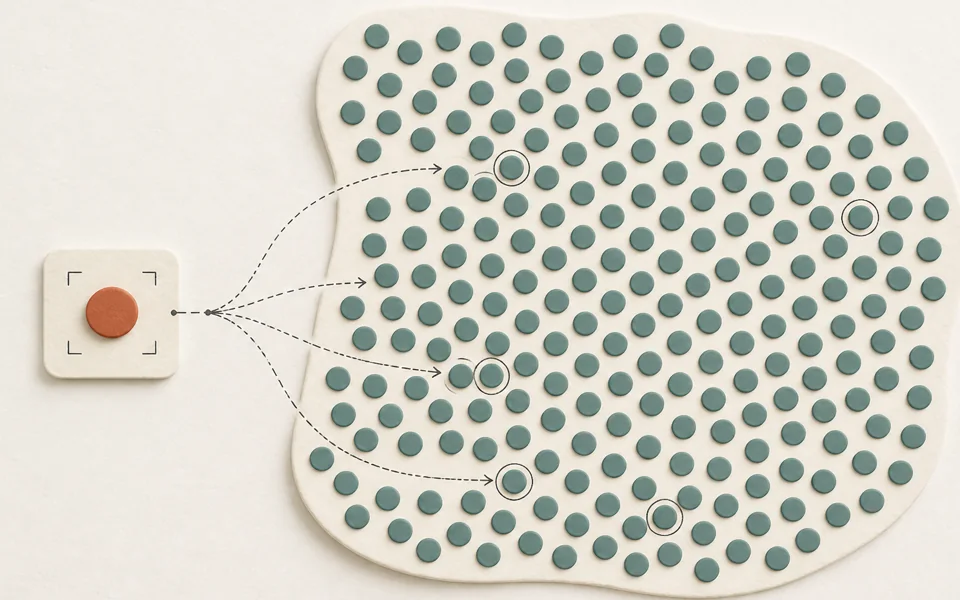
Counting
GeCo
GeCo is a low-shot counting model that uses exemplar boxes to detect, segment, and count objects.
Open task guide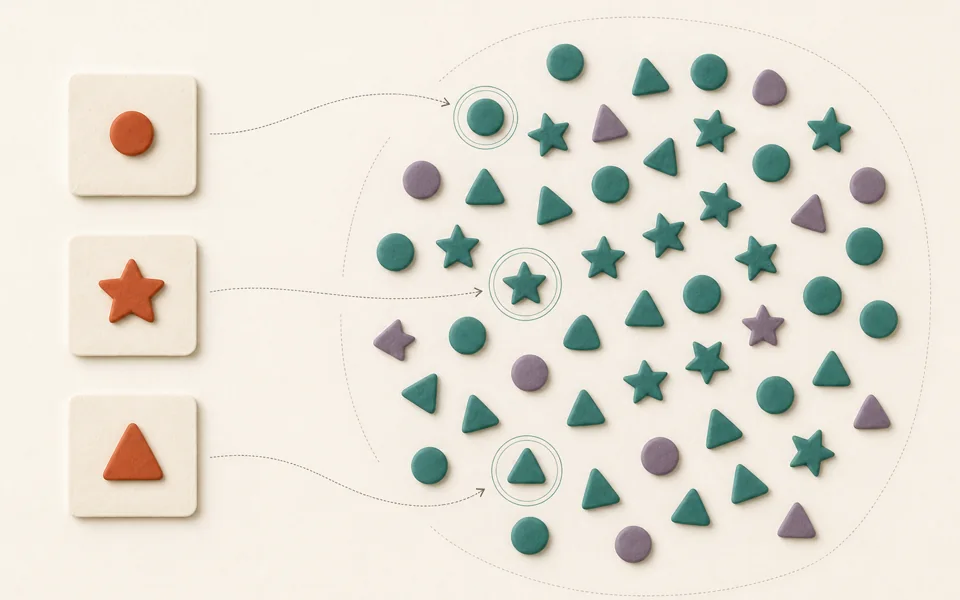
Counting
GECO2
GECO2 is a few-shot object counting model designed for dense and scale-varying scenes. Instead of relying on heuristic image tiling or aggressive upscaling, it builds exemplar-aware query features across multiple backbone resolutions and fuses them into a high-resolution detection map. This makes it better suited for crowded images with small objects, large objects, or both at the same time. In the X-AnyLabeling workflow, GECO2 is exposed through the remote inference service provided by X-AnyLabeling-Server.
Open task guide
Description
Image Captioning
X-AnyLabeling supports image-captioning workflows through its Chatbot and visual question answering tools. Both tools can send the current image to a vision-language model and store or export the generated description for review.
Open task guide
Description
Tagging Annotation
Tagging assigns descriptive labels to an entire image or to selected shapes.
Open task guide
Detection
Object Detection
Object detection identifies objects and their locations in an image.
Open task guide
Detection
Oriented Object Detection
Oriented object detection surpasses standard object detection by adding angular precision to pinpoint objects in images.
Open task guide
Estimation
Depth Estimation
Depth-estimation models estimate the relative distance from the camera for every pixel in an image.
Open task guide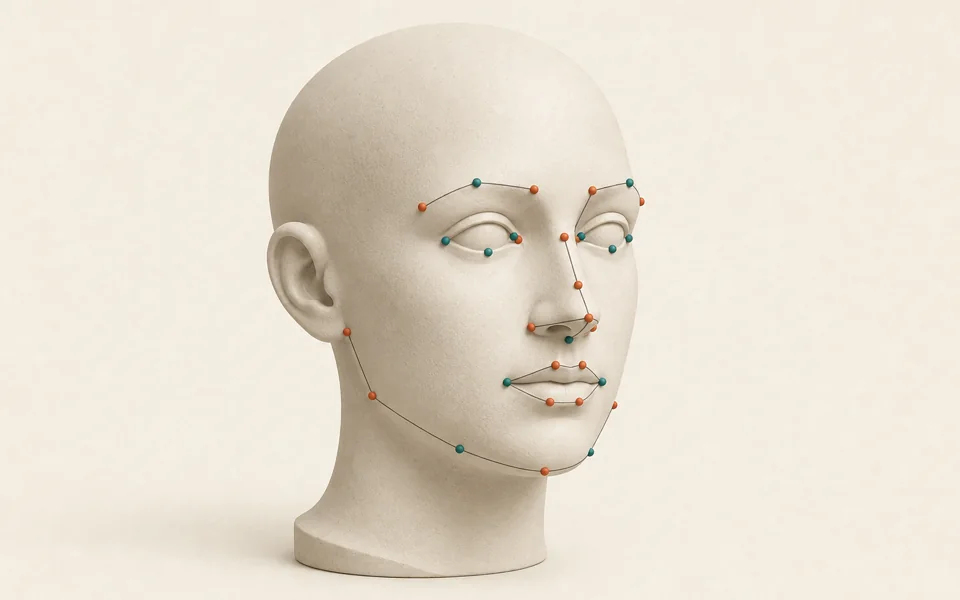
Estimation
Face Estimation
Face estimation covers face detection and facial landmark annotation. X-AnyLabeling supports models that create a face rectangle and five facial keypoints with a shared groupid, making it easy to keep each face and its landmarks linked as one object.
Open task guide
Estimation
Pose Estimation
Pose estimation identifies keypoints such as joints, landmarks, or other distinctive object features.
Open task guide
Grounding
LocateAnything
LocateAnything is a vision-language grounding model that returns boxes and points using normalized coordinates. X-AnyLabeling integrates it through X-AnyLabeling-Server, so inference runs in a dedicated server environment and the client receives standard annotation shapes.
Open task guide
Grounding
SAM 3
SAM 3 is a unified foundation model for promptable segmentation in images and videos. It can detect, segment, and track objects using text or visual prompts such as points, boxes, and masks. Compared to its predecessor SAM 2, SAM 3 introduces the ability to exhaustively segment all instances of an open-vocabulary concept specified by a short text phrase or exemplars.
Open task guide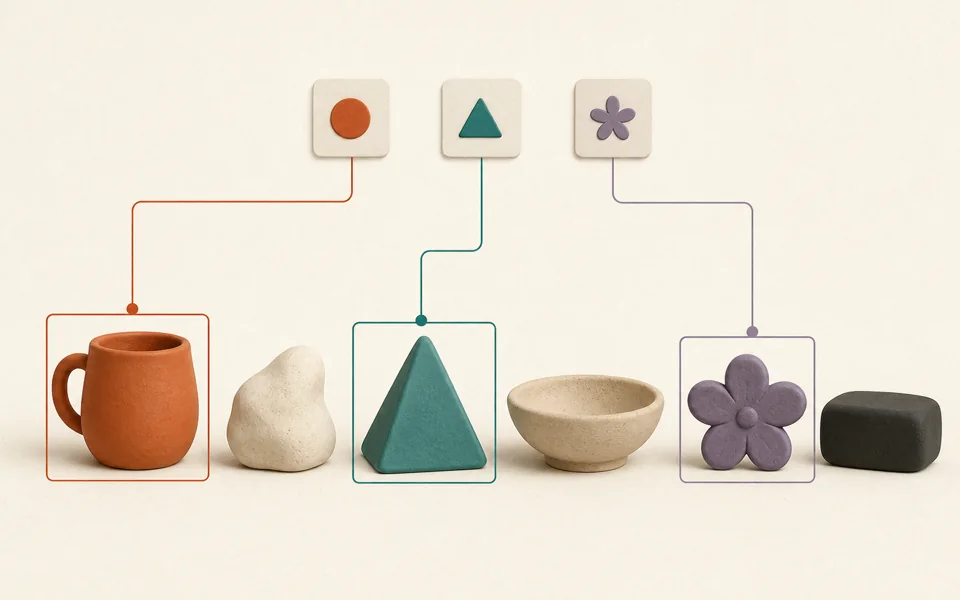
Grounding
YOLOE
YOLOE (You Only Look Once, Extended) brings state-of-the-art "anything" detection capabilities to X-AnyLabeling. Based on the research paper YOLOE, this model enables real-time detection and segmentation of any object you can describe or indicate visually, eliminating traditional category constraints.
Open task guide
Interactive Video Object Segmentation
SAM 2 Video Segmentation
Interactive Video Object Segmentation (iVOS) has become an essential task for efficiently obtaining object segmentations in videos, often guided by user inputs like scribbles, clicks, or bounding boxes. In this tutorial, you'll learn how to leverage the video tracking feature of SAM2 on X-AnyLabeling to accomplish iVOS tasks.
Open task guide
Interactive Video Object Segmentation
SAM 3 Video Segmentation
SAM3 is a unified foundation model for promptable segmentation in images and videos. It can detect, segment, and track objects using text or visual prompts such as points, boxes, and masks. Compared to its predecessor SAM2, SAM3 introduces the ability to exhaustively segment all instances of an open-vocabulary concept specified by a short text phrase. SAM3 Video performs Promptable Concept Segmentation (PCS) on videos, taking text as prompts and automatically detecting and tracking all matching object instances across video frames.
Open task guide
Matting
Image Matting
Image Matting is the process of accurately estimating the foreground object in images and videos. It is a very important technique in image and video editing applications, particularly in film production for creating visual effects.
Open task guide
Multiple Object Tracking
Multi-Object Tracking
Multi-Object Tracking (MOT) technology is used to simultaneously identify and track multiple targets within video sequences, involving the association of targets across different frames.
Open task guide
Optical Character Recognition
Document Layout Analysis
Document Layout Analysis is used to identify and extract the layout structure of documents, including text blocks, images, tables, and other elements.
Open task guide
Optical Character Recognition
Key Information Extraction
Key Information Extraction (KIE) involves extracting essential information from images, such as retrieving a name and ID number from an ID card. The type of information extracted is often specific to the task at hand but can vary across different tasks.
Open task guide
Optical Character Recognition
PaddleOCR-VL-1.5
PaddleOCR-VL-1.5 is a unified Vision-Language OCR model that supports multiple document understanding tasks through a single model architecture. Built upon powerful vision-language foundations, it can handle diverse OCR scenarios including text recognition, table extraction, formula recognition, chart understanding, seal recognition, and text spotting with bounding boxes.
Open task guide
Optical Character Recognition
Text Recognition
Currently, X-AnyLabeling supports both manual and automatic annotation of the PP-OCR dataset.
Open task guide
Segmentation
Image Segmentation
For example, to segment a plant while excluding its pot, place positive points on the plant and negative points on the pot. Press F when the mask is ready, enter a label, and save the object.
Open task guide
Training
Model Training
This guide walks you through training Ultralytics models directly within the X-AnyLabeling GUI. You can prepare your dataset, configure training parameters, launch a training job, and monitor its progress—all from one convenient interface.
Open task guide
Vision Language
Florence 2
Florence-2 is a novel vision foundation model with a unified, prompt-based representation for a variety of computer vision and vision-language tasks, developed by Microsoft.
Open task guide
Vision Language
Rex-Omni
Rex-Omni is a 3B-parameter Multimodal Large Language Model (MLLM) that redefines object detection and a wide range of other visual perception tasks as a simple next-token prediction problem.
Open task guide